The Generalized Assignment Problem (GAP)
The GAP consists of optimally assigning a set 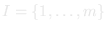 of tasks to a set
 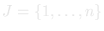 of agents. Each task must be performed by exactly one agent, and each agent has a limited resource capacity. Mathematically, the problem can be formulated as follows:
min 
s.t.: 


Here  is the cost of assigning task i to agent j,
  is agent j's capacity, and
  denotes the amount of resource required by agent j to perform task i. The binary variable
  equals 1 if agent j performs task i and 0 otherwise. When processing the tasks requires more than one type of resource, the problem is known as the multi-resource GAP.
The GAP is NP-hard, and it appears naturally inside vehicle routing: assigning customers to vehicles (or to depots, or to days) is a generalized assignment problem, which is why GAP models arise as subproblems in many VRP construction heuristics, Lagrangian relaxation schemes, and route-first/cluster-second and cluster-first/route-second decompositions.
See also: Bin Packing Problem · VRP formulation · P and NP classes